Saturday, December 10, 2011

Apple (a) Day

On Wednesday, third grade garden day, my third grader wakes up with a stomach ache.  He complains of this particular complaint with enough frequency that I usually make him go to school for main lesson and if he still remembers that he has a stomach ache at recess time, he can come home.  Usually by recess, it’s gone.  But there were enough nocturnal rumblings from that corner last night justify a day off.  For him.

Unfortunately, it’s the busy holiday season and no one can sub for me in the garden, so the boy home from school has to go to school with me.  He brings his drawing pad and a blanket and we make him a little nest near my workstation.  The garden can’t spare an adult today: it’s apple day. We have multiple sharp objects for peeling and slicing, plus, as a bonus, boiling hot applesauce to put into boiling hot jars.  All hands on deck.  (This year we did apple day at the school with apples brought from a parent’s trees, but to get a sense of it, see last year’s apple day.)

My station is applesauce cake, the position of least danger.  No knives or peelers, mostly just measuring cups and spoons, to intersect cleanly with the measuring segment the kids are doing in math. 

We get the cake mixed, and Wild Child points at me, “Um, YOU are BLEEDING.”  Somehow, in my little station of round objects, I have gashed my knuckle, as if just knowing that there are people peeling apples within 100 feet is enough to take off some skin.    WC then starts a chorus of “Ooooh, gross!” and immediately takes advantage of the fact that I have turned my back to wash off the blood and grab a band-aid; WC leads the group over to the little pond where they immediately all break off chunks of ice so they can then yell about how cold their hands are.

 I make them wash their hands so they can get the batter into the pan and then the oven.  “Why do we have to wash our hands AGAIN?” they whine, clutching the chunks of pond ice.  “Um…” I roll my eyes.  “Why don’t you think about that as you walk to the sink?”

Once the cake is in the oven, my little sick guy lurks near the baking warmth and good smells.  Poor thing, he won’t be able to have any of the cake that will go back to class as celebration for the teacher’s birthday.

Fortunately, by midday we determine that we have peeled and chopped enough apples to shut down the sharp objects workstation, freeing up an adult to relieve me in the kitchen, and they send us home. 

We pick up my kindergartener and head home to make our own applecake from the same recipe.  And by the time it gets out of the oven, steaming warm spice, we all feel better.

Applesauce Cake
(makes 2 9-inch pans or 1 Bundt pan with extra for a couple of little cake-lets)

Preheat oven to 350.  Grease & flour pans.

Cream (forks in the garden, mixer at home):
2 sticks butter
1 1/2 cups  or less brown sugar (use less if your applesauce is sweetened)

Beat in:
2 large eggs

Mix:
3 cups flour
(in the garden we use 100% whole wheat, at home we did 2 cups white and 1 whole wheat)
1 1/2 tsp baking soda
2 tsp cinnamon
1 tsp cloves
1/4 tsp nutmeg (fresh grated in the garden—may well explain the gashed finger)
Ginger to taste (optional)
1 tsp salt (reduce if your butter is salted)

Stir flour mixture into wet ingredients in 3 parts, alternating with

2 cups homemade chunky (or just any) applesauce

In the garden, we added some crushed walnuts to the top.  At home, we stirred in three cut up apples that were getting old in the fridge.  In other words, add whatever you want.

Bake anywhere from 30 minutes to an hour depending on your pan and oven.

If you feel fancy (we did), sprinkle with powdered sugar.

Share and enjoy.

Thursday, December 1, 2011

Tucking in the beds


As we prepare for the rain and cold, we are having a general clean-up day.  I’m recovering from a cold and should probably be tucked in bed, but I came anyway.  Fortunately, Wild Child and I have struck an easy truce as we fill the day with various physical tasks: weeding, mulching, cleaning out the greenhouse, and finally planting all the leek starts.  WC often tires of any given task, but I have found a secret: if I laugh heartily at his jokes (yes, the same ones that my son has come home and told me ad infinitum), he can stay on task easier.  So he repeats old joke after old joke, and then, as we gently separate the little chive-sized leeks from one another and nestle them down in their beds, he comes up with a new one.  Which he then proceeds to repeat over and over, pleased with himself, until it is old.  But the leeks keep getting planted, so I keep laughing.  And I mean it.  Because, really, we are happy.


Of course, I told him I’d post it so all the parents could read it: “You know, when you are getting ready for winter you usually fill the leaks with patches?  Well, we are filling the patches with leeks!”  (Big chuckle.  Every time.)


Clean-up (Pomegranate/Walnut) Salad

It’s now or never for most of the lettuces, so despite the chill in the air, we are having salad today.  
Harvest, triple wash, and spin the remaining lettuce in the beds. 
Cut open a pomegranate and remove the seeds.  (You can cut it in half and bang it with a spoon and they just fall out, wow!) 
Toast a few handfuls of walnut pieces on the stove. 
Mix up some olive oil, apple cider vinegar, and honey. 
Toss it all together and enjoy! 

Wednesday, November 23, 2011

Giving thanks: full circle (cut into parts)

Who said a little rain could cancel pizza day, after more than a year of preparation by these kids?  And by midday the sun came out after all, and the kids said this blessing before they sat to eat:

The silver rain,
The shining sun,
The fields where scarlet poppies run

And all the ripples of the wheat
Are in the pizza that I do eat

And when I sit for every meal
And say a grace
I always feel

That I am eating rain and sun
And fields where scarlet poppies run.

 We ask all good blessings on our meal and on everyone.


How to Make Pizza
In the spring, collect a bunch of manure to spread over the plot you have double dug.  Layer the manure, then cardboard, then straw, and water the whole pile weekly for four months.

In the fall, remove the straw and cardboard and add them to your compost pile, then dig in what's left of the manure.

Make some rockin' scarecrows out of old clothes and trashed CDs.  Have fun with it.  Try not to fight too much over the best accessories.


Scatter heirloom wheatberries passed down to you from the previous year's class over the prepped plot.  Mark the field so people will know it's not just grass.


Watch it grow.  Notice how much it shoots up when it rains.  Check it at least weekly for 7 months.  In the spring, see the slow toll of gophers, and the impression of the deer that thinks the wheatfield is a great place to sleep.


In the summertime, come by to learn to use a scythe and harvest the wheat.


In the fall (yes, the second fall), thresh (the doing-the-twist-on-a-pillowcase method is always popular) and winnow the wheat.  Get a visceral sense of the phrase "separating the wheat from the chaff."


Grind the wheatberries.  Make dough from the resulting flour (Mix 3 cups flour with 1.5 tsp salt. Mix separately: 1 package active dry yeast, 1/2 cup tepid water, a pinch of sugar, wait 5 minutes, then add 3/4 cup cold milk.  Mix the dry and wet ingredients, add 2 Tbsp olive oil, and once it masses, let it rest 5 minutes.  Then knead 50 strokes, rest 2 minutes, knead 20 strokes, cover and let rise for 1.5 hours or until you have the outdoor oven ready.)

Form into pizza rounds, load up with toppings...


bake...  


and share.


Bless the food, and enjoy.  Then go back to your classroom for a fractions lesson.


Saturday, November 19, 2011

Time for a Break

T calls in the morning, reminding me to bring the sack of wheat I have at home from the summer harvest (part of a diversified grain storage plan intended to minimize rodent risk).  “Left it in the classroom at drop-off,” I tell her, just before getting into the shower.  There’s an hour before garden class starts and despite the seeming folly of showering before gardening, I’m just that much in need of a shower that it can’t wait.  When I get out of the comforting steam, my phone has two urgent messages from T: “Help!  I left the cooked pumpkin and pie recipe at home.  Do you have the Joy of Cooking?  Call me.” And “Oh, and I somehow forgot the cream, can you stop and get two pints of heavy cream on your way over?”

I’m not worried about the pumpkin, as we still have several massive heirloom pumpkins sitting around, so we can throw another one in the oven.  And pumpkin pie happens to be one of the things I feel don’t need a recipe.  I’m more worried about T, that the constant onslaught of tiny details and broad visions of what more we can do has worn her down to this state of exhaustion.  Good thing we have a week off for Thanksgiving next week.  

Turns out, today she has the perfect pre-holiday class planned: pumpkins galore.  The kids are tired, too, and restless, so it seems like a good day to be less ambitious than usual and just enjoy the fruits of our harvest (or, that is, the vegetables).  


We divide into two groups: half go to work on the pie project and half make (fully compostable!) Thanksgiving decorations to take home.  And, lo and behold!  Somehow, despite the fact that the pie prep wasn’t done as planned, we are eating it by the end of class, reminding the kids of how they planted the pumpkin starts last spring.  


So, along the theme of everyone needing a break, I will now fail to wrap up a nice little essay and instead provide some pics of what a beautiful day it was.   (And of course, the pie recipe.)


Pumpkin Pie


In the spring, as a last-minute afterthought to the corn planting, plant some heirloom pumpkins along the edges of the cornfield.

When summer ends, discover that the pumpkins have thrived from the thrice-weekly watering of the corn.  Tenderly move the vines and drag the giant pumpkins away from the tetherball courts that they have claimed as their own.

Load them up into wheelbarrows and share the harvest with all the faculty and staff who have supported the garden program.  Keep a few for seed-saving and cooking.

Cut into quarters (halves would be too big to fit in the oven), scrape out the seeds (for next year) and pulp, and bake until soft.  Scape flesh from shell and mash.

Beat three eggs, add enough mashed pumpkin to make two pies, mix with 3/4 cup brown sugar and a pint or so of heavy cream, a pinch of salt, and whichever spices the kids want to add (cinnamon, nutmeg, cloves, ginger). For extra fun, let the kids put a fingerful of ground cloves on their tongues.  Make sure they have a clear path to the water fountain.

Pour into crust* a bake about an hour.


*School Garden Vegan Crust

Okay, you might be noticing that we are not so good with actual recipes.  I think this might be great for the kids, as they see how you can improvise and be creative.  On the other hand, I personally like to have a recipe from which to work.  Our pie crust started with an old Joy of Cooking recipe and morphed from there.  The ingredient breakdown went something like this:

2 1/2 cups whole wheat flour   
a handful of blue cornmeal (adds a great nutty flavor)
1/2 teaspoon salt
1 cup cold Earth Balance fake butter
6 tablespoons ice cold water
we would have added a dash of ground cardamom but we forgot

Cut the fake butter into the flour/salt/cornmeal with forks or a pastry cutter.  Dribble in enough of the water to form the dough into a ball.  Roll out as best you can (it won’t be as elastic as a white flour crust), then do your best to transfer it into a cast iron pan (or pie tin).  We had to do a lot of re-assembly in the pan, pinching it back together.  The lesson: pie doesn’t have to be perfect to be great.  Of course, a pastry cloth or wax paper would have made a smoother counter-to-pan transfer, but we use what we have, which is often our hands.

 Pour in the filling and throw that baby in the oven.  Do not do not do not fret that the kids will not like the whole wheat cornmeal crust.  They will LOVE it.  Really and truly, they did. 


Saturday, November 12, 2011

Off and Running

The fourth graders used to seem impossibly grown-up. Now one of them is mine, and yes, they are impossibly grown up. For little kids. They are starting to learn fractions, so next week we will wrap up the loose ends of their 3rd grade farm year by threshing and grinding the wheat they planted this time last year. What does that have to do with fractions, you wonder? Well, when you thresh and grind wheat, you have flour. And when you have flour, and a cobb oven, you can make pizza. And when you cut pizza… fractions! And yes, planting wheat a year ahead of time does seem like the long way around to learn how to divide a whole into parts. 

Then again, it might be a short cut to learning how to turn parts into a whole. How to turn a group of kids into a community, how to turn several bites of food into an understanding of soil enrichment (the horse manure I brought from our pony to prep the soil, real life poop in their shovels), pest management (scarecrows, amazingly effective), measurement & recording (how much rain fell into the gauge, how tall are our shoots this week), and time (in the classroom they do what-time-does-this-clock-say worksheets, the garden gives them a sense of time’s passage as they see their wheat sprout and change, watching the clock hands of their lives moving forward as the wheat and they all grow taller together). But that’s the fourth graders, and their pizza won’t be in the oven until next week. 

This week it’s the third graders’ turn to plant their wheat, and to me it feels like I’ll blink and there they will be, big fourth graders, threshing and grinding. This convergence of planting and pizza have brought me to the predictable (yet always surprising) revelation that I can’t stop time, and my kids are growing older, and I can’t slow it down no matter how much I just want to keep them small enough to stay under the shield of my motherwings. “Slow down!” I want to yell, over the din of the third grade class negotiating with each other about which clothes and accessories will make the best scarecrows. (Scarecrow-making tends to be the class in which we dive headlong into intense social dynamics.) 

Instead, I fall back on my usual “Walking feet please, walking feet” singsong, with which I remind them that there is a hard and fast No Running rule in the garden area (hey, we have knives and sharp tools AND slippery mud, we gotta draw the line somewhere). I am The Enforcer of such rules—“your mom is such a nurse,” they complain to my son—constantly making kids rewash their hands or return to their starting place and walk, losing their coveted place in line. They all know that I’m unlikely to cut them much slack in that way, always wishing they would slow down and stay safe. 

So when my scarecrow group finishes their creation (I love these kids, because when they couldn’t decide whether it was a man or a woman and I suggested “transgendered,” they all just shrugged and said “yeah, that.”) and we are assigned to go harvest for today’s stir-fry, we all walk off across the playfield toward the beds behind the classrooms. Well, maybe there was some surreptitious skipping behind my back, but I didn’t see that; I certainly would have had to nix the joyful skipping if I’d seen it, so I kept my eyes on the purple bean vines we were heading for. Actually, we are not technically in the garden area so the No Running rule isn’t valid, but I’m not going to bring that up. Wild Child is in my group, and his feet are anxious ones, always tapping and shuffling, kicking wood chips and generally trying to escape the confines of their assigned space. 

We pick half of the long eggplant-colored beans, leaving the rest for the afternoon group, then build a large pile of kale leaves on top of the bean bowl, and I let Wild Child harvest the lone tiny broccoli floret which has suddenly become the object of all his longing. The excitement of adding his own unplanned ingredient to the stir-fry is almost too much for his twitchy feet, and his wide green eyes turn up to me pleading, as we turn to head back across the wide expanse of grass to the garden. “As long as you stop at the garden gate,” I smile, taking the bowl of vegetables. And they are off, as if their feet have wings. Maybe my wings are getting too small for them already.  

Autumn Harvest Stir-fry 

Overheard, a monologue: “Stir-fry! Cool, stir-fry is awesome…. Wait. No, not stir-fry. I hate stir-fry. Yuck... Wait. What is stir-fry, anyway?” 

The thing about this recipe is, well, there’s no recipe. Except we had pre-boiled potatoes to add in. Other than that, you just harvest what you have, chop it up, and sauté it. Add a little Bragg’s Amino Acid spray and voila, a garden meal. The garlic makes the whole garden fragrant as it cooks, and everyone is hungry, and they love it, a big bowl of vegetables with almost nothing else, and enough for second helpings. 

This time we used: garlic, leeks, purple beans, kale, a tiny piece of broccoli, and the aforementioned potatoes. Wild Child’s instructions to me on how they made the stir-fry mostly involved a meticulous description of how you actually have to touch the kale to wash it because the water alone will not get the dirt off.

Tuesday, November 8, 2011

Harvesting Corn

Welcome to the November Carnival of Natural Parenting: Kids in the Kitchen
This post was written for inclusion in the monthly Carnival of Natural Parenting hosted by Hobo Mama and Code Name: Mama. This month our participants have shared how kids get involved in cooking and feeding. Please read to the end to find a list of links to the other carnival participants.

Probably somewhere there is a poet who could or has put the sacredness of a school garden corn harvest into words.  Mine come out melodramatic, in my attempt to capture the awe of the moment.  Even Wild Child was radiant and smiling, proud of the work she did to help create our bounty of blue corn.  This is how it went.

There was no farm machine, chugging down row after row.  This work was in children’s hands, held by grownups who love them, toiling in a space of reverence.  Celebrating life, the giving thereof, the cycle of planting and growing and pollinating and watering coming around to harvest, to the action of taking down the sky-reaching plants, pulling off the ears, and preparing them to dry.  This corn has lived with and in these children for months already, and it will continue to live with and in them as it dries in their classroom in months to come.  They will be reminded from time to time that the words the corn hears will enter into the corn, and so they should choose gentle and kind words to speak, so that when they eat it they are not eating anger and meanness.

In the spring, they will grind it and shape it into tortillas and finally eat it. Their work will become food.  The children will eat the corn, simple food, a tortilla, and they will know in their bodies the months of work that it takes to create such a thing.  They will be at some deep level conscious of the history that goes into their bodies.  For they know that their seeds were saved for them by the grade before them, and those kids’ seeds were saved by the grade before that, and so on, year to year.

But the story of the corn goes beyond the school, so in the digging of compost into hard soil, and in the planting of the seeds, and in the summer-long watering, and in the raucous dance of shaking the stalks to ensure full pollination, and in the scattering of corn meal onto the ground to give back, and in the uprooting of stalks and the shucking and weaving together of the ears, the children hear repeated the story of the corn.  The story of the people who grew it on their mountainsides on Mexico, and of the culture which the corn sustained there, and then of the influx of agribusiness and GMO corn; the story of the fear of the people that if they lost their corn, they would lose themselves along with it.  And the story gets longer with each retelling, as it reaches toward the present moment of harvest, when children around the world are caring for this corn, the saved-seed corn of the people in Mexico who have asked for help in keeping their corn alive in the face of unthinkable odds.  And the children hear themselves become part of that story. 

It seems too great a story for them to bear on their shoulders, and yet in the end, or at least where it ends this year, it is a story of fruition, of community reaching beyond geographical and cultural borders, of people helping people, of preservation, in its deepest sense.  And perhaps this generation of children growing into a climate-changing world has to bear too great a burden simply by virtue of their age, but at least here, in the garden, we can teach them that in their hands they hold the power to sustain life, and keep alive the seeds of hope.


***

Carnival of Natural Parenting -- Hobo Mama and Code Name: MamaVisit Hobo Mama and Code Name: Mama to find out how you can participate in the next Carnival of Natural Parenting!

Please take time to read the submissions by the other carnival participants:

Friday, November 4, 2011

Blood, sweat, and pears

It’s a rare day when someone doesn’t need a band-aid in the garden.  After all, we have real live plants!  With sharp edges!  Today we are cleaning up the cornfield to prep it for next springs planting, which means uprooting the remaining stalk-stumps and gathering up the leftover leaves.  Which are sharp.  But the kids take it in stride, mostly.  If it’s a hard work day like today, a leaf-cut can buy you some down time. 

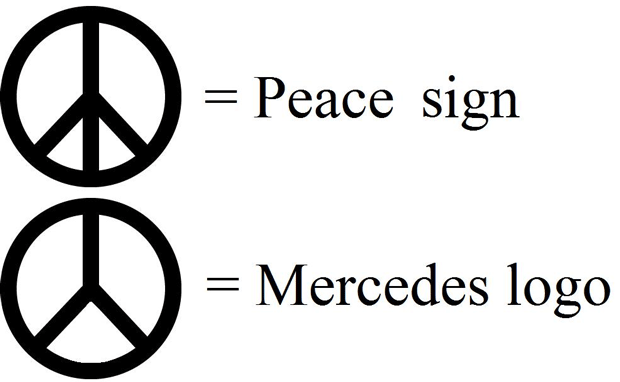
And today we are working hard.  By the end of class, we adults are grinning because there are actual beads of sweat visible on several faces, which means that although it is November, the asian pear salad on today’s menu won’t seem too cold for the season.  The kids have cleared the field of corn detritus as well as leftover pumpkin vines and weeds,  hauled several loads of compost over and dug it in, and sowed a peace sign* of heirloom favas surrounded by red clover to act as “green manure,” adding nutrients into the soil for next year’s corn to use. 

Wild Child, of course, is ahead of the game, having second-guessed the upcoming compost curriculum by spontaneously tunneling into the compost heap and discovering the hand-burning hot spot in the center of it.  “Um, that’s called an exothermic reaction,” I mutter, knowing that he could care less.  His hand is black and hot, and he wants to show the rest of the class this amazing discovery.  Soon, there are many, many hot black hands waving to the remaining kids to “Come and check THIS out!” 

And then it is time to curb the enthusiasm as we have to do some serious hand-washing before we sit down to eat.  At the sink, choruses of “Happy Birthday” and the ABC song overlap as the black hands become presentable again, a joyful round of handwashing tunes, music to this nurse’s ears.


Asian Pear-Mint Salad

Have about five kids each chop up an asian pear.  Try to keep this task happening even when one of the kids finds a live worm in her pear.  Marvel at the variety of sizes of chunks that result. 

Whichever kid finishes her pear first can squeeze the juice from one and a half lemons into the bowl of pear chunks. 

Gather a large bunch of fresh mint, wash it, and let the kids remove the leaves, chop them up, and throw the mint in with the pears. 

Add a dollop of honey, stir, and you are ready to go, so the kids can go help with the compost digging.  The salad will stay fresh until the cornfield is all prepped and hands are again clean.


*We adults had to have a mini-conference to try and remember whether the peace sign has a line all the way down the middle.  We were dangerously close to sowing a fava-bean Mercedes logo.