Hi all,
Thanks for supporting the school garden. I'm doing all my blogging now at my Million Tiny Things blog: gardening, life, and everything in between. I'd love you to subscribe there and keep up with our ongoing garden antics. Feel free to scroll through these archives!
Kenna
Friday, January 25, 2013

Thursday, May 10, 2012
Growing up
 First, admire our fabulous new bean teepee, then read about
our day…
First, admire our fabulous new bean teepee, then read about
our day…
It’s getting warmer, with that energizing spring heat, and
we are all glad to be back out in the garden after the last week of
standardized tests. For the
morning, we must all band together to get those tomatoes into the ground! They are getting spindly-tall in those
little pots. We review how to
pinch off the lower leaves and plant the plants deep enough to give the
too-long stems a strong foundation.
Sometimes the kids feel like this these days: they’ve all grown a few
inches when I wasn’t looking. A
few weeks of neglect: vacation, testing, a sick day, and suddenly they no
longer fit in the little plastic boxes of my preconceptions.
I’m somehow assigned to the pair of girls who usually get
under my thin, non-teacher skin within the first few minutes of class. They are strong, bright, willful girls,
with a lot to say (and no sense of when it’s someone else’s turn to say
something). They are also
self-involved to the point of not seeing the full range of hurtful behaviors
they can so easily turn on the less vocal, less opinionated members of the
class. And so, in my role as
enforcer of the general peace when T is trying to get us through some
curricular hurdle, I often have to pull them aside for “reminders,” which they
usually interpret as unfounded attacks on their unblemished characters. Which means, in blunt, that they don’t
like me so much. And if I’m honest
and lay aside my “teacher” hat, I have to admit it’s mutual.
Fortunately, I did remember to wear that “open heart, open
mind” teacher hat today, even though it sometimes chafes my temples. So when T sends the three of us off to
plant our tomatoes, I leave my hopeless sense of “boy, won’t this just be so
fun… not” in the greenhouse. Off we go to our assigned garden bed,
with the seemingly simple task of planting two whole tomato plants. We’ve got our work cut out for us. When we get there, we find a whole
clutch of broccoli plants on the verge of going to seed. Wild Child #1 turns around, and seeing
no adult more likely than myself nearby to give the answer she wants, warily
focuses the full force of her long-lashed eyes and wheedling voice on my
person: “can we eat some, please please?”
“Sure, as much as you want,” I shrug. She needn’t have tried so hard. I generally encourage grazing, and we
just have to pull these plants anyhow if we want to have room for the
tomatoes. The next several minutes
pass with the girls enthusiastically chomping broccoli and chard, and pulling
up the broccoli plants by the roots.
This proves to be so much fun that they keep wanting to pull more and
more, going way beyond our assigned area, rather than settling down to the job
of getting the tomatoes on the ground.
As I expected, the whining sets in, just about when I call
them back to the task at hand.
“It’s soooo hot.”
“Yep, so the sooner we get these plants in the sooner we can
get out of the sun.” I’m masking
my sweat-induced irritation by cleaning up around the edges of the bed they are
theoretically supposed to be “working” in.
Whine, dig, complain, lose focus, work even slower. WC#2: “It’s REALLY hot. Can I get a drink of water?”
“Sure, as soon as we get the plants in and watered, we’ll
take a water break.” (After all,
it’s only two plants—if I were doing it myself it would take about 30
seconds. Not that I’m feeling a
wee bit impatient or anything.)
“But, but, but..”
“Let’s just get it done, guys.” I’m such a mean hard-ass; I can see it in their set jaws and
hear in their whispers.
Whine, dig, complain, lose focus… but eventually, with many
deep theatrical sighs, the tomatoes get into the ground. Once that’s done, there’s no more
asking for water, as the girls have caught sight of the big pile I’ve made of
the broccoli plants they pulled and left helter-skelter all over the path. “Can we do something with that?”
Hmm, that’s not what we’re supposed to be doing, really—we
should clean up the beds more--but I’m sick of nagging them. “Sure, let’s head down and wash it and
trim off the edible bits—we can add them to the salad.” So we all three head into the shade of the
kitchen work area.
The three of us, out of the sun and now with no assignment
requiring timely completion, somehow all simultaneously decide to drop our
annoyance with each other. These
girls, the ones who usually make me close my eyes and breathe slowly before I
speak, are just chatting with me, politely. And I with them.
We fill a big colander with trimmed-off bit of broccoli (yes of course
the stems were woody, but we didn’t care), washed it, mixed it with salad
greens and dressed the whole thing with leftover mango dressing from the Mayday
picnic.
Our salad was beautiful (tough stems and all) and delicious
(if you spit out the stems) and more than that, we had fun doing it. All three of us. Together. The wild girls are getting taller, and more mature,
and if their stalks are to have the proper support, I’ve got to let them out of
the little boxes I’ve been keeping them in, and shore them up with some good
soil, and watch them set their own roots.
We’ve all got our jobs cut out for us here in the garden; just sometimes
I’m looking too closely at the task at hand to see the bigger work. (Thank goodness for the strong-willed
girls who can push at my edges.)

Thursday, May 3, 2012
Insert your critique of standardized testing here
(Kids in the classroom filling out circles instead of in the garden. Chewing gum instead of fresh veggies. Wrong wrong wrong if you ask me. Which no one did.)
Friday, April 6, 2012
Make way
The kids have been clearing the beds by their classroom like mad to make way for all the new starts. Pulling up old plants with gusto, barely remembering to save a few for seeds, mostly just pulling pulling pulling—uprooting toppling fava bean plants everywhere to make way for MORE KALE! (Plus a few zucchini, but really, those just get out of control with not enough people on campus in the summer to prevent them from becoming not-so-tasty behemoth vegetables.) The kale will grow fast in the heat and we’ll be eating it before we leave for summer break.
In the pollinator-friendly perennial bed behind us, the tiny
plants these exact same kids planted last year in their little handmade gopher
baskets are naturalizing, spreading out tall and wide and tossing masses of
blossoms toward the bees. Their
mosaic tile border bricks, carefully molded in milk cartons by thoughtful second
graders, are now taken for granted, overgrown as they are by the sprawling
flowers. The kids don’t look back,
don’t think about how they dug in the manure, loosened the packed ground. Do not notice how their months of work
last year have turned this bare dirt patch into a lush habitat.
Now they are simply bent on uprooting. It’s so easy, and strangely satisfying
to see how on this side of the path, so little effort is required to turn a
dense vegetable garden into a naked one.
“Make way for the new!” they declare, fistful after fistful, no regret
or remorse troubling their brows.
They are so ready to leave behind the things they are done with. Me, not so much. I cling to their childishness, begging
for just a few more tastes of the sweetness of their lingering innocence,
hoping some grace we planted there can survive. As they clearcut, I “supervise” by staying nearby, coaxing
weeds out from the understory of the pollinator bed.
To me, the two sides of this path reveal the two aspects of
their changing nine-year-old natures.
On one side I can see the maturing of what has been planted so far in
various selves: the mastery of piano books, the ability to get lost in
full-fledged novels, the sophistication of real humor, the moves upward in
levels of ballet, tae kwon do, baseball, carpentry. And on the other, their stubborn retention of their ability
to uproot one thing and try on something else completely new.
Even
as they hone their chosen skills, they keep their identities unfixed; they
still have so many possible selves to try on, take back off, and decide to keep
or toss to Goodwill. Whereas I’m
hopeless at clearing beds, getting stuck in the nostalgia of the beautiful fava
plants, thinking “If we just wait, these will bear such delicious beans.” So, I’ll stay here in my perennial bed,
nurturing the flowering plants, while these kids have more important work to do,
growing. And the yummy kale chips
next month will be thanks to them.

But
this week: Spring Rolls!
Buy: brown rice spring roll wrappers
For the dipping sauce, mix to taste the following:
Garlic, pressed after the kids complain that chopping is
silly and make you go find the press
Ginger, minced
Tamari
Mint leaves, chopped, whatever kind the kids want from the
garden
Grate (after the kids complain that chopping is silly and
make you go find the grater—apparently this was a lesson if using the right
tool for the job, garden helper):
Beets
Carrots
Chop:
Beet greens
Rainbow chard
Mix the veggies with hoisin sauce and wrap in wrappers
according to instructions. Serve with
sauce. Voila!
Saturday, March 31, 2012
Finish to Start
Having recently attended a training in which she was convinced that kids have too much constraint in their lives (really?? these kids??), T persists in allowing the kids to choose their own activities (from a short list provided by her). This tactic creates a great deal of chaos at the start of class, but the end result, at least in theory, is that you get a group of kids who are really excited about whatever activity they are doing. Hmmm. The kids are jumping all around the garden trying to change groups, recruit their friends to their preferred activities, and generally postpone the start of class. And they are very loud. It makes me a little crazy.
This system of self-assignment frontloads the frustration factor. But then we all really do have fun, and the kids stay on task. I'm starting to buy in, and wondering how I could apply this principle to other aspects of my life. So when my youngest suggests that she should trade her current lightweight chore of feeding the cats in exchange for "washing the windows, scrubbing the walls, and sweeping," I, against my initial instinct, agree. You've never seen such energetic sweeping (even if you have seen a much cleaner floor). And the windows really are a little more transparent.
Back in garden class, my morning group made pumpkin muffins (recipe below) with great enthusiasm. And bringing things full circle, two afternoon kids chose to plant pumpkin seeds (check out the gorgeous heirloom pumpkin from which we saved aforementioned seeds last fall). So by the end of the day, we had proud cooks, full bellies, and several flats of pumpkin starts in the greenhouse. Seems that the system works after all. Trading a little crazy for a lot of good work. Not a bad plan for a garden, or a class or third graders, which really, if you think about it, needs both to thrive.

Pumpkin Muffins for the People (makes 30 good-size gluten-free muffins)
Beat 4 eggs.
Stir in 1 cup maple syrup and 4 tsp vanilla.
Then add:
5 cups Pamela's® gluten-free baking mix,
2 big scoops of cooked pumpkin (about 2 cups or more--ours was cooked in the fall and frozen until now),
and several shakes of whatever spices smell good to the kids (ours picked cardamom, cinnamon, cloves, and nutmeg).
Mix and transfer to well-greased muffin tins (fill each about 2/3 full).
Bake at 350º for 20 minutes or so.
In the afternoon, we made wheat flour muffins from a recipe we found lying around (which as usual we altered beyond recognition). They were lighter but not as sweet (since the morning group had used more than our share of the maple syrup, ooops), so the kids liked the gluten-free version better.

Thursday, March 22, 2012
Missed out
As much as I might have preferred to be in the garden, I was trapped in mandatory computer training all day at work. Here’s how much info I could extract from my 3rd grader.
Mom: How was gardening?
Kid: Fun.
Mom: What did you do?
Kid: (Shrug.)
Mom: What did you cook?
Kid: I don’t know. Oh, stir-fry.
Mom: With…
Kid: Greens.
Mom: Was it good?
Kid: Yep. Can I
go play now?
Mom: (Shrug.)
Friday, March 16, 2012
The Three “S”es


 First, we follow the water. All over the campus, down drains and through pipes and
across the field, down through the garden.
First, we follow the water. All over the campus, down drains and through pipes and
across the field, down through the garden. And way out back, T has created two waterflows, one straight
and direct and FAST, the other using the Slow it, Spread it, Sink it
lesson. S times 3. And we see which one would allow the
salmon to spawn safely.
And way out back, T has created two waterflows, one straight
and direct and FAST, the other using the Slow it, Spread it, Sink it
lesson. S times 3. And we see which one would allow the
salmon to spawn safely. 


Thursday, March 8, 2012
Recipe to come
Well, we had stomach flu at our house, so I wasn't at garden class this week. But apparently they made yummy greens and potatoes, and I'll try to get the recipe as soon as I can...
Thursday, March 1, 2012
Rain, Rain, Come and Stay
Neither rain nor sleet nor snow… okay, well, we don’t really have those last two around
here. But we certainly aren’t
letting a little rain stop us from having garden class this week. Especially since we’ve had so little
rain this year, so all of our “rainy day” curricula are languishing in the
filing cabinet. Hurrah for the
rain!


Number one on our rain list: watersheds. I grew up near a creek, the flow of
water toward which was so easy to see in the acres of open farmland. I didn’t know the word watershed and
didn’t really need to, having an intuitive understanding of the process of
water flowing toward the sea.
But these kids mostly live where there are lots of houses,
and it’s not always clear where the water in the drainage ditch beside the
driveway is heading. To the
neighbors, right?
So watersheds is our main rainy day theme, and it starts
with the big picture. Big trays of
clay that the kids mold into pathways by which precipitation flows toward the
wetland (a sponge) and then the ocean.
Hands-on learning, indeed.


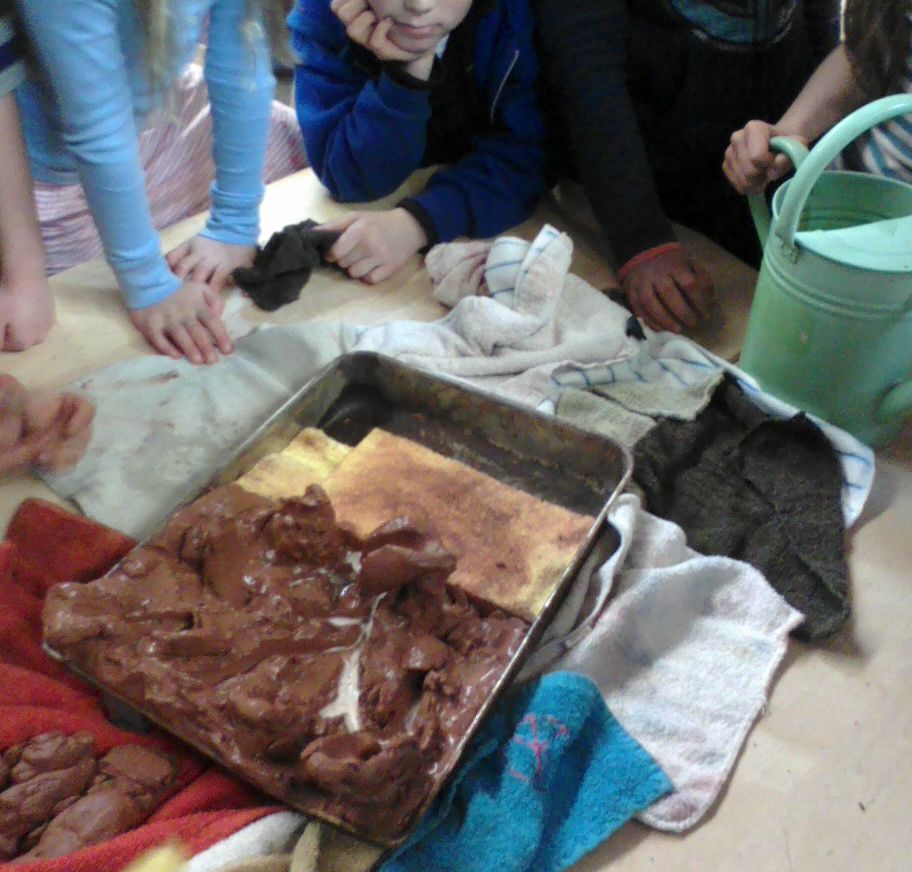
(No cooking today—our kitchen is wet wet wet.)
Friday, February 24, 2012
special president's week edition
There's no school, so presumably we are all home reading. At our house, we are actually, for once, honoring the Presidents' Holiday by reading this brilliant book:

Buy it from your local independent bookseller and enjoy forever. Pay no heed to the misconception that your kids are "too old" for picture books. This one has the Gettysburg Address on the endpapers. Maira Kalman, who can do no wrong, loves Lincoln and she will make you love him too. Hurrah for her!
Saturday, February 18, 2012
Free-for-all
The faithful readers may have noticed that so far, February has been, well… a little difficult. The kids were pushing at the boundaries, hard. So at the beginning of this week’s class, with the children all lined up on benches waiting for their assignments, I was fully expecting T to give a stern lecture on, oh, you know, Respect and Following Directions and so on.
Nope.
Instead, she asked them to choose their activity. “Who wants to build raised beds? Who wants to cook?” Whaaa? She’s letting them pick? Surely, chaos and pandemonium will ensue!
The potential chefs warily ask, “What are we cooking?” to which T responds breezily, “Whatever you want!” and sends the two who want to cook trotting off toward me, the assigned kitchen helper of the day, who had in fact been told that we were making sautéed greens.
Well, okay then, um, kid choice. I did have to clarify a bit: “We can make whatever you want within the parameters of what ingredients are available. And what’s ready for harvest is mostly kale.”
These kids, though, they are incredible! They harvested a HUGE mess of kale, found a leek and some garlic in the garden, and went to town. They also wanted biscuits, and there happened to be a big bag of Pamela’s gluten-free baking mix in the fridge, so they whipped out a big batch of gluten-free drop biscuits in time for the box-builders to have a fabulous after work snack.
The afternoon group, five cooks in all, decided that greens were off the menu, so they made pizza, or, well, they made the closest thing to pizza we could do given our aforementioned parameters.
And guess what? They were angels. Given some space, some latitude, and an opportunity to invent, they also self-regulated, which worked out far better than our attempts to regulate them usually do. Ahhh, freedom.
So, kid-inventions below.
(Plus, the other groups built some rocking redwood garden beds!)

Super-delicious greens
Harvest a big bunch of kale. Then harvest double that amount, while explaining to the kids how greens cook down much smaller than their original size.
Harvest, wash and chop one leek, sauté in olive oil.
While waiting for leek to cook, chop up a small head of slightly green heirloom red garlic (sooo yum), then add that into the pan.
While all that was going on, someone was washing and chopping up the kale. Add as much as you can fit (about half) into the pan until the pan is heaped high, then watch it cook down. Add some Bragg’s Amino Acids and dump it into a bowl.
Decide that before you cook the rest of the greens you will roast up some pumpkin seeds in your pan so throw those in. When they seem toasty, add a bit more oil and the rest of the kale, sauté until bright green and soft. Add more Bragg’s if you want.
Combine the two batches and chow down. Very excellent served with gluten-free drop biscuits.
Garlic flatbread (the foodstuff formerly known as pizza)
Harvest some red garlic. Get a bit carried away, and harvest a lot.
Wash, peel and chop small, sauté.
Meanwhile, set up two bowls for dough. Let the kids figure out what they want in their dough (okay to give hints). Bowl #1 used one egg, gluten-free baking mix, and some water. Bowl #2 used wheat flour, an egg, some baking powder (no yeast on hand), and salt. They each mixed and kneaded and flattened out the dough on a cookie sheet as best they could.
Spread oil and sautéed garlic all over the dough, cook at 450 or so until brown on edges (gluten-free cooks faster, fyi), about 10ish minutes.
While baking explain psychology of naming food to kids: if they tell their classmates they are serving "pizza," the kids will be expecting tomato sauce and cheese. If they say "garlic bread," they will be expecting sliced bread with butter. "Garlic flatbread," consensus reached by the time the food was ready. And the kids all loved it!
Saturday, February 11, 2012
stick-to-it-ness
This week, by noon, we were ready to throw in the kitchen
dishtowel. The kids had been great
while on-task, but when they sat down to eat their bowls of pasta and hear a
story about--you guessed it!--reverence,
in preparation for next week’s tree-planting ceremony… Well, let’s just say that “reverence”
was not the theme of the day. The
theme of the day was more stick-with-it-even-when-you-feel-entirely-discouraged-and-sure-whatever-it-it-you-are-doing-will-never-work.
Midway through the morning class, when T walked past the
kitchen with her group of tired raised-bed carpenters, she asked how the
pasta-making was going.

“Yes, now,” I added.
“But it did require a certain amount of stick-to-it-ness.” (Refer to the recipe below!)
Fortunately, the kids’ pre-irreverent modeling of that
stick-to-it-ness was just the lesson that I needed to help me not flee in
terror before the afternoon group came.
The morning group is usually the Calm Group. Yikes.
But we stayed, and they came, and for my group I laid out
the boundaries of expected behavior clearly. (Something like: “I have NO
patience today for people not listening.
I have lots of nice but no patience left, so you’re either in garden
class or out, and out means the office.”)
And amazingly, that’s all they needed: an adult with no patience
left. We started to measure out
the flour, and we each stuck to our job even through the sticky bits, and we
all had plenty of nice (even though it seemed unlikely), and plenty of pasta
(even though it seemed like it would never work), and plenty of fun (well, of
course).

a.k.a. the easiest recipe in the world (to remember, not to
make)
1 cup flour
1 egg
Some warm water if it won’t stick together.
Quadruple it to feed ten kids plus helpers (that’s two bowls
each with a doubled recipe).
Oh, plus we added some garlic powder just for fun. Let’s describe it as a “dash.”
Mix flour with garlic powder and make a hole in the middle
of the flour to crack the eggs in: one egg per two hands. Beat eggs with a fork and then mix into
flour. We needed a few tablespoons
of warm water to get our dough to stick (probably depends a lot on your flour
and the size of the eggs).
Be careful not to make it too sticky as you have to run it
through the pasta machine.

Theoretically, the dough will emerge as a long strip of
flattened dough. In practice, it
might come out of the machine as a bunch of sloppy dough shreds. This will seriously challenge the faith
that the group previously had in the machine, themselves, and their adult
helper.
Try again! More
shreds. Cheerlead a bit,
hopefully. Press the shreds into a
something resembling a messy slab and try again. Woohoo! Bigger,
flatter shreds! We can do it! Keep going. Flatten, crank, repeat. Eventually, if you believe, and stick to it (not to the
machine, that would be overly disheartening), you will in fact have a long thin
strip of dough. Which you can fold
in half and keep running through the machine as you adjust the rollers to be
closer and closer together.
This roll, fold, repeat maneuver is not in the printed
instructions, but if you happen to have watched your friend the professional
chef make pasta with this own kids one night, you will recall that he did this
so it seems like probably a good idea.
Miraculously, the sheets eventually turn shiny and beautiful
and you can move the crank handle over to the noodle-cutting part of the
machine, and crank the sheet through to the delight of the owners of the eight
hard-working hands!

 (Confession: we used jar tomato sauce. But we also harvested kale and sautéed
it to eat with the pasta. With
grated parmesan for all.)
(Confession: we used jar tomato sauce. But we also harvested kale and sautéed
it to eat with the pasta. With
grated parmesan for all.) |
| YUM!! |
Friday, February 3, 2012
C is for Cabbage, and Cold, and Coleslaw, and Compromise
It’s cold season, so T started off the class with a brief
talk about Vitamin C, where you find it, and how it works. Her theater training really pays off
when it comes to engaging the kids’ attention: they were transfixed by her
impersonation of the immune system.
Then we set off for the garden with a plan: food with high C-content
today!
This week I was off remixing a barrel of dirt with my group
(that’s a process of digging, dumping, blending nutrients--compost!--into the
soil, and refilling) and planting peas, greens, and flowers, so when we headed
in to wash up and eat the coleslaw that the cooking group had made, I asked the
kitchen helper mom if she followed the recipe as written that I found lying
beside the chopping boards.
“Yes, I followed it exactly,” she said.
“Wow. That
never happens,” I murmured as I copied it down to post. Word for word, starting to wonder if I
needed to credit the source. I
don’t usually since our normal garden kitchen procedure is to mangle the
starting recipe far beyond recognition before we are done.
“Oh, except, I didn’t do the thing with the apples,” she
remembered, after I carefully wrote out the too-many steps to prevent apple
browning. “I just put them in
last.”
“Okay, cool.”
We serve ourselves big bowls of the immune-supporting slaw.
“Hey, there are carrots in here. That wasn’t in the recipe.”
“Well, they were on the table, so we used them.”
“Of course. And
I’m noticing a bottle here that appears to have once contained agave syrup.”
“Oh, yeah. We
used that too.”
Recipe, take two.
Source: what’s on the table, with a few tips from an old CSA newsletter
from Taylor Maid Farm.

Cold-season Coleslaw
1 red cabbage, hacked to bits
1 green cabbage, similarly prepped
However many carrots are in a bunch, grated
A panful of roasted walnut pieces
Some crispy apples, grated at the last minute
2 Tbsp apple cider vinegar
Lemon juice from one lemon
Sea salt
Fresh ground pepper
1/2 cup olive oil
However much agave syrup remains in a mostly used-up bottle
A
splash of heavy cream (if you’ve got vegans)(Come to think of it, with that much cabbage they probably doubled the dressing recipe as it was originally written for a single-cabbage slaw.)
Whisk vinegar, lemon juice, salt & pepper together, then whisk in olive oil. Then agave and cream. Toss with cabbage, carrots, walnuts and apples. Serve.
Friday, January 27, 2012
How to harvest broccoli
Okay, truth is, this week they were all Wild Child and Wild Child was so wild that I am
still recovering and have zero energy for blogging. But I probably don’t need to say what happened in garden
class to the rest of you third grade parents since you are the ones at home
scrubbing out the mud-soaked clothes and silt-swamped shoes…


Unless your kids was in this group of kids who managed to
move a bunch of compost without getting drenched:

But, in brief, here goes.
You know, this is just one of those things that I so hate to admit I didn’t know before I went to third
grade garden class. But I
didn’t. I never knew the correct
way to harvest broccoli. Not that
I’ve ever had much to harvest beyond a few little florets. But still. I hope someday to need to know how to harvest broccoli. And now I do. (You cut it diagonally below the florets you want to eat but
above healthy leaves so the stalk can send out some new florets.)
Broccoli with lemon butter

Make a pot of brown rice.
Harvest and cut up broccoli (florets and stems), steam.
Melt some fake butter (for the non-dairy types); squeeze out
a lemon; mix “butter” and juice.
Mix broccoli, lemon butter, a big handful of sesame seeds,
and some Bragg’s Amino Acids (Extra squirts for the kids who like it
salty). Serve over the rice. Yum.
Saturday, January 21, 2012
We're all in this together
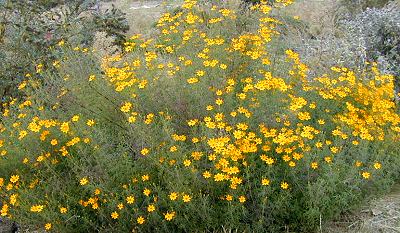
Unlike the picture I grabbed off the web (my camera is broken), our bush currently looks like a brown stick-bush, thanks to the recent freezing nights. So the kids are surprised to realize, as they cut back (to best of their ability given that we give them child-size clippers with limited capacity for cutting anything over a 1/2 cm diameter), that the plant is still very much alive.
"Hey, it’s alive in here,” Wild Child notes. “We’re not hurting it, are we?”
Assured that, no, they aren’t hurting it, just allowing it to grow back healthier, they attack with full abandon, each coveting the longer sticks. But Bossy Boots reminds them that this is a collective task. “There’s no such thing as your stick and my stick.” All together now.
Hot Biscuits on a Cold Day (Seriously, what could be better, since our “classroom” is outdoors?)
2 cups flour or gluten-free baking mix (For the wheat version, we used the bag of white flour b/c I didn’t notice the jar of whole wheat until it was too late. Half white/half whole wheat works well.)
2 t baking powder
1/2 t salt
1/2 t baking soda
5-6 T Earth Balance or other fake butter
3/4 c buttermilk
Mix dry ingredients, cut in butter substitute, then stir in buttermilk. Knead, roll out, and cut out rounds with any old jar you have sitting around.
Bake at 425 for 12-15 minutes.
Herb Butter
DO NOT do what we did, which was keep the cream cold, chill the jar, and chill the marbles. Our butter was what my kids call a “big fail.” We served our biscuits with runny herb whipped cream. Start with everything at room temperature.
1 pint heavy cream
5 marbles
A big handful of chopped (or pulverized if the kids prefer the mortar and pestle approach) herbs, whatever you like, we used parsley and thyme
Throw it into a jar and shake until you have butter. This is a GREAT activity if Wild Child has extra energy—just send her jogging around the field with the jar for a few laps. With our too-cold version, it made a great example of how we all much pitch in to accomplish a task, as everyone’s shaking arm had plenty of opportunities to get tired.
Friday, January 13, 2012
thank you, garden program
Overheard at my house this week:
Nine-year-old to six-year-old, "If you don't put the greens on your taco, you are missing out on a BIG TREAT. Seriously."
Friday, January 6, 2012
Tis the (next) season
Our garden teacher not only knocks herself out designing
this soul-feeding program for our kids, she also has kids of her own. And not just the two with whom she
lives (off the grid, by the way, growing their own food, generally showing the
rest of us how unnecessarily comfortable our lives are). As for the others, well, I guess since
they are sheep, not goats, they are lambs, not kids.
It’s lambing season, the stresses of which I only vaguely
recall from my teenage reading of All Creatures Great and Small, a Yorkshire country vet’s account of his years
stumbling around barns extracting stuck lambs from their mothers. The whole venture gives me a sense of
wet wool steaming in the cold, and wobbly legs. (And since I was a midwife for a time, bright red afterbirth
as well.)
So the garden is fallow, we have a break from garden class
for a few more weeks, and T is home on her land with the lambs, receiving field
trips of wide-eyed school children yearning for a glimpse of a fresh-made baby
animal. There’s nothing like new
life to start a new year off right.
We’ll hope for rain, and let this year take a few more weeks to get its
wobbly legs working right.
And I will refrain from providing even one recipe for rack of
lamb.
Friday, December 30, 2011
Winter break
No school. No garden class. No rain.
I don't mind the first two. But maybe a bit of the third would be nice?
See you after break--if you're looking for some reading, check last week's holiday message...
Saturday, December 24, 2011
Real, True Gifts
These long dark nights of winter break remind me of my own
inner darkness. Sometimes I am
mean. And hard-hearted. Just before the break, I was
meanly resenting the students in the garden for not appreciating what was being
laid before them. They were
restless and inattentive. To them,
it seemed much more like classroom learning than most moments in the garden:
they were being asked to copy something from the blackboard, to draw and label
the layers of compost that they had been assembling in the new pile. They whined and interrupted. I spoke up: “Guys, I keep hearing
people talking while T is trying to explain something, and it doesn’t feel very
respectful to me.” Okay, not
so very mean. But what I meant was
“shut the %&*# up, this is important. She is giving you a gift here, people.”

I was acutely aware of this gift, having had the need to call upon it not long before. The story: I am particularly hard-hearted when it comes to my
depriving my own kids of the pleasures of modern life, namely, movies. My poor kids are so movie-starved that
when I am too ill to do anything but lie in bed, I can show them a
cheese-making instructional video and they actually enjoy it. But recently, weary from various
personal stressors, I decided to let them watch an actual, mainstream, narrative-based film. For this
special event I chose Wall-E, based on
my completely uninformed impression that it had a strong pro-environment
message.
Wall-E,
unfortunately, did not give us an evening of relaxed family time. Rather, my five-year-old whined through
most of it that it was boring, and my ten-year-old ended up in tears. Given that the movie has an predictably
happy ending, the tears confused me, until my sweet, sad boy said, in reference
to the earth overrun by life-killing garbage that provides the backdrop for the
robot love story: “I feel like that’s really happening.”
My kid sees a planet being abused. And who am I to correct him? When we are willing to let drop all the masks we wear to
protect ourselves from seeing it, we know he’s right. That’s what’s really happening, in many ways, perhaps not
precisely through the over-accumulation of soda cans, but from the
over-accumulation of carbon in the atmosphere and toxins in our
environment. It’s real. And scary. And sad.
So, what do you tell a kid who is describing a basic truth
about the world, a sad, scary truth?
You hand him another truth, a concrete, real, hopeful one. You say, “But you and I, and all the
kids at school, we will not let a world like that happen, a world without soil,
without plants, without food. Without
life. Because you and I, and all
the kids at school, we know how to make dirt. We know how to create a place for plants to grow, and how to
grow food. We, all of us, will
never let that happen.” And when
you say that, he nods, and you see some light return to his eyes.
May the light ever return, and may we pass on the gifts that
we are given. Now, let’s make some dirt.
Recipe in pictorial form:
How to make Compost Cake:

(And later in the year, once their dirt-making pile is
smokin’ hot, I’ll make them the chocolate version. So check back in the springtime.)
Friday, December 16, 2011
Everyone loves latkes (even Santa)
Last spring, during the last week of school, I corralled a
handful of second grade boys into planting a bed full of potatoes. They, to be honest, would have rather
been playing tetherball. But I
told them, panic rising in my voice: “but if we don’t plant the potatoes, we
won’t have latkes next winter!”
That got ‘em digging.
Everyone loves latkes, even the kids who don’t know what they are.
Truth be told, our potato bed didn’t fare as well as usual
and this year’s latke potatoes were storebought. But the kids did follow the rhythm of it, spring planting
for winter food.
The third grade focusses its learning around Hebrew culture,
so this last week before winter break, latkes are always on the menu. They’ve been learning “Oh, Hanukkah”
since kindergarten, so they are well primed by “Gather round the table, we'll
give you a treat/Dreidels to play with and latkes to eat…” Though somehow, the religious
significance of the oil and the festival of lights seems somewhat watered down
by the proliferation of Santa hats around the table. Ah, well, we feed them, and some of it they absorb, right?

The Two (no-so-secret) Secrets to making good Latkes

Secret Number One: get the starch OUT of the potatoes!
Give each kid a good-sized potato to grate. Have two at a time dump their grated
potato into a thin muslin cloth, twist it up and squeeze all the liquid
out. Squeeze hard, then dump
now-dry grated potato into a large bowl.
Repeat for each pair of kids.
Meanwhile, discuss all the possible uses for potato starch if you chose
to save the “squozed-out” liquid and dry the starch.
Have each kid beat one egg and add to potato bowl, throw in
a teaspoon or so of salt (we used about 1.5 teaspoons per dozen potatoes), and mix.
Secret Number Two: have the oil HOT!

This means that really, you have to read the kids a story
while a parent fries the latkes in an insane frenzy of hot oil and flame. Remind them of the significance of the
oil and the menorah. Serve those
latkes hot off the stove (after a quick drain on paper towels), with the
applesauce they made last week.
Keep frying until everyone has had thirds and you are out of potato
mixture.
Then, since they gobbled so fast, let them play in the woods
until the time for garden class is over.
‘Cause there’s nothing like muddy feet to add a sense of the sacred into
any day.
Subscribe to:
Posts (Atom)